-
-
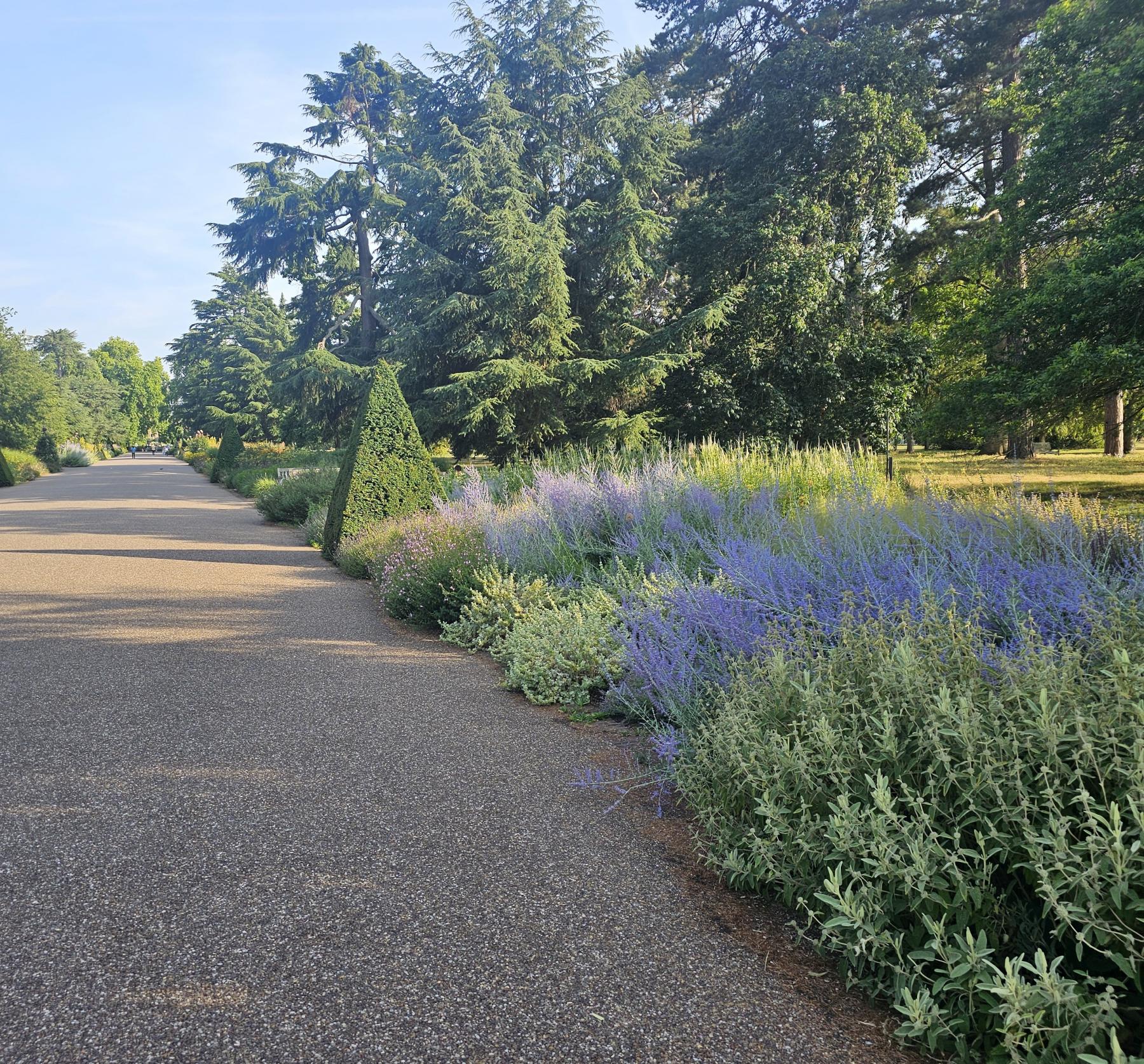 The Great Borders on the Broad Walk
 -
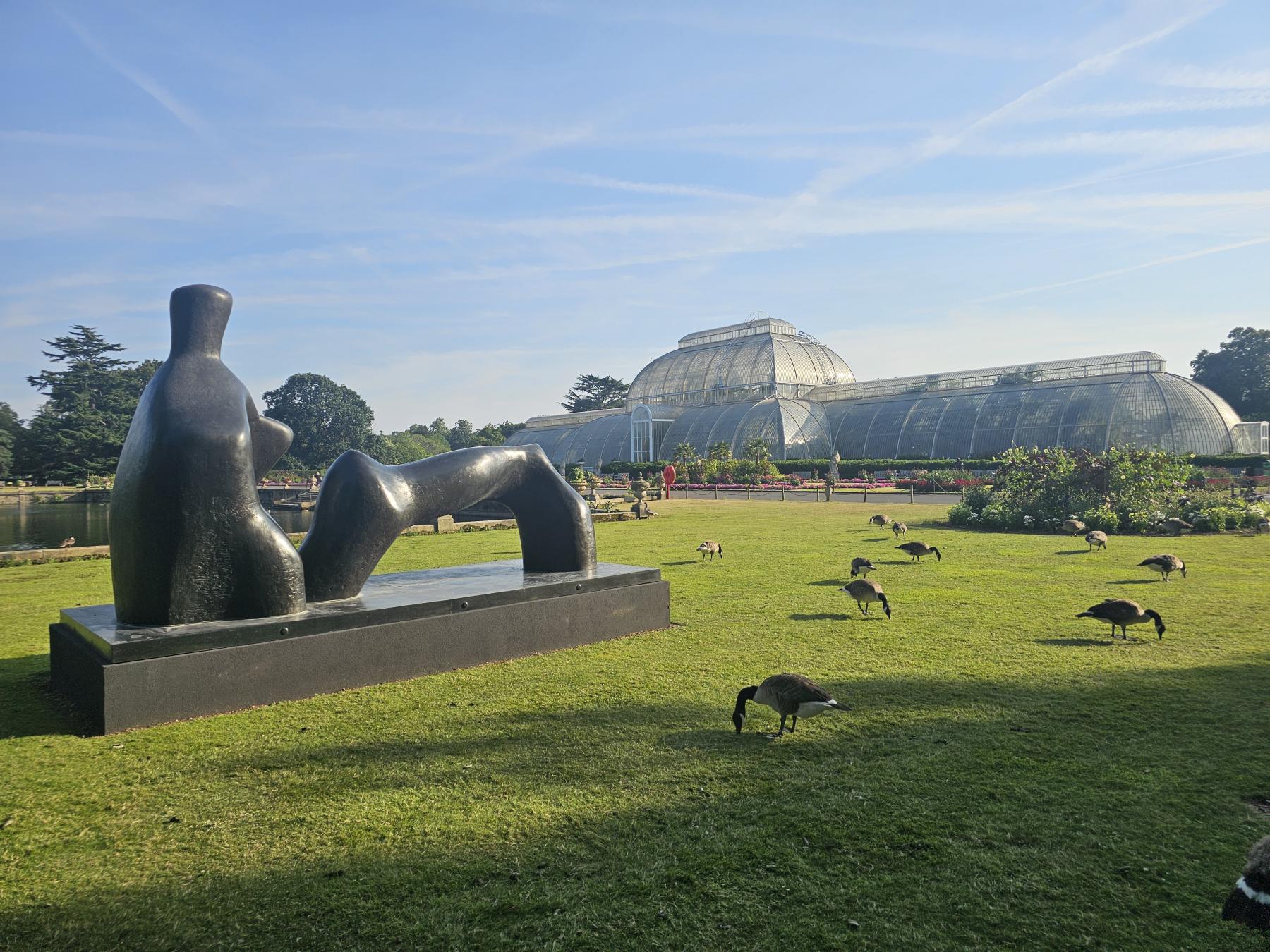 Henry Moore and Palm House with Canada geese
 -
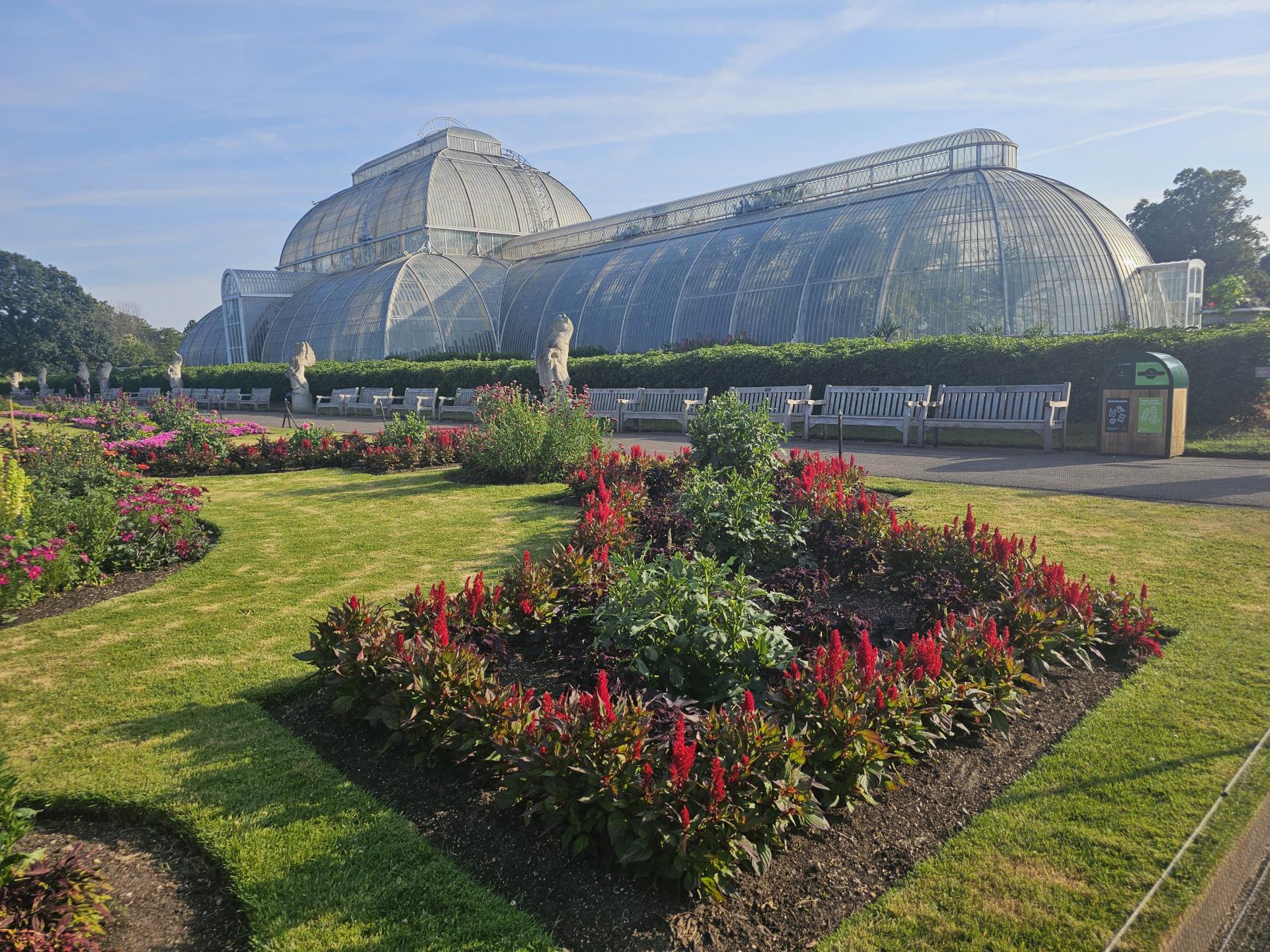 Palm House and rose garden
 -
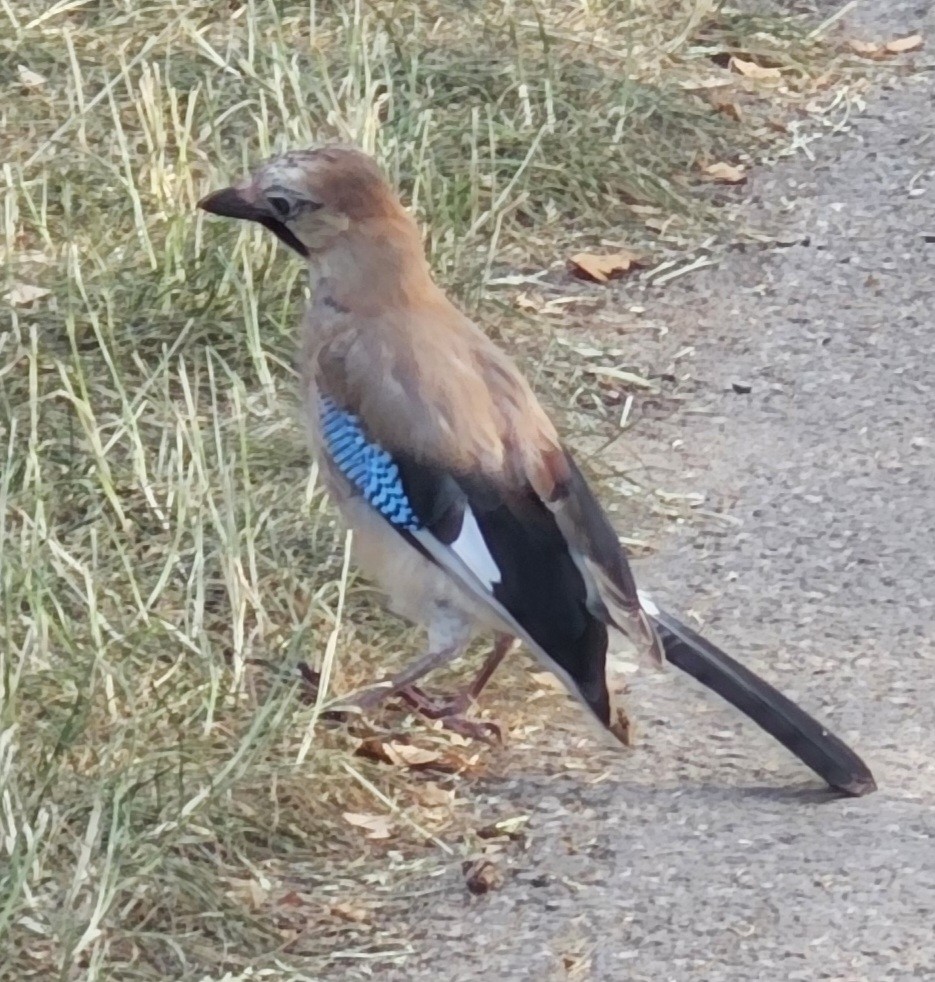 A jay
A jay -
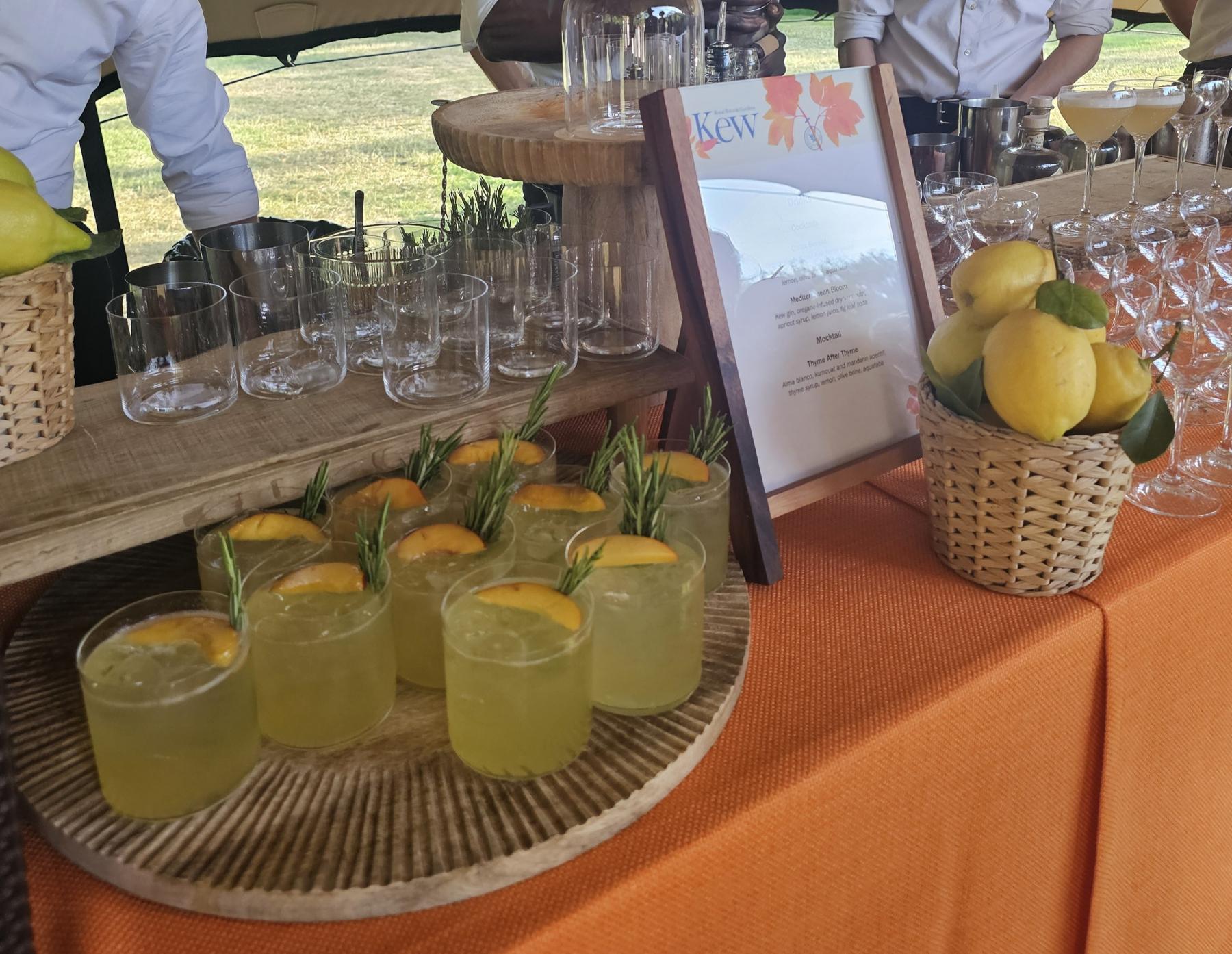 Cocktails with fresh nectarines
 -
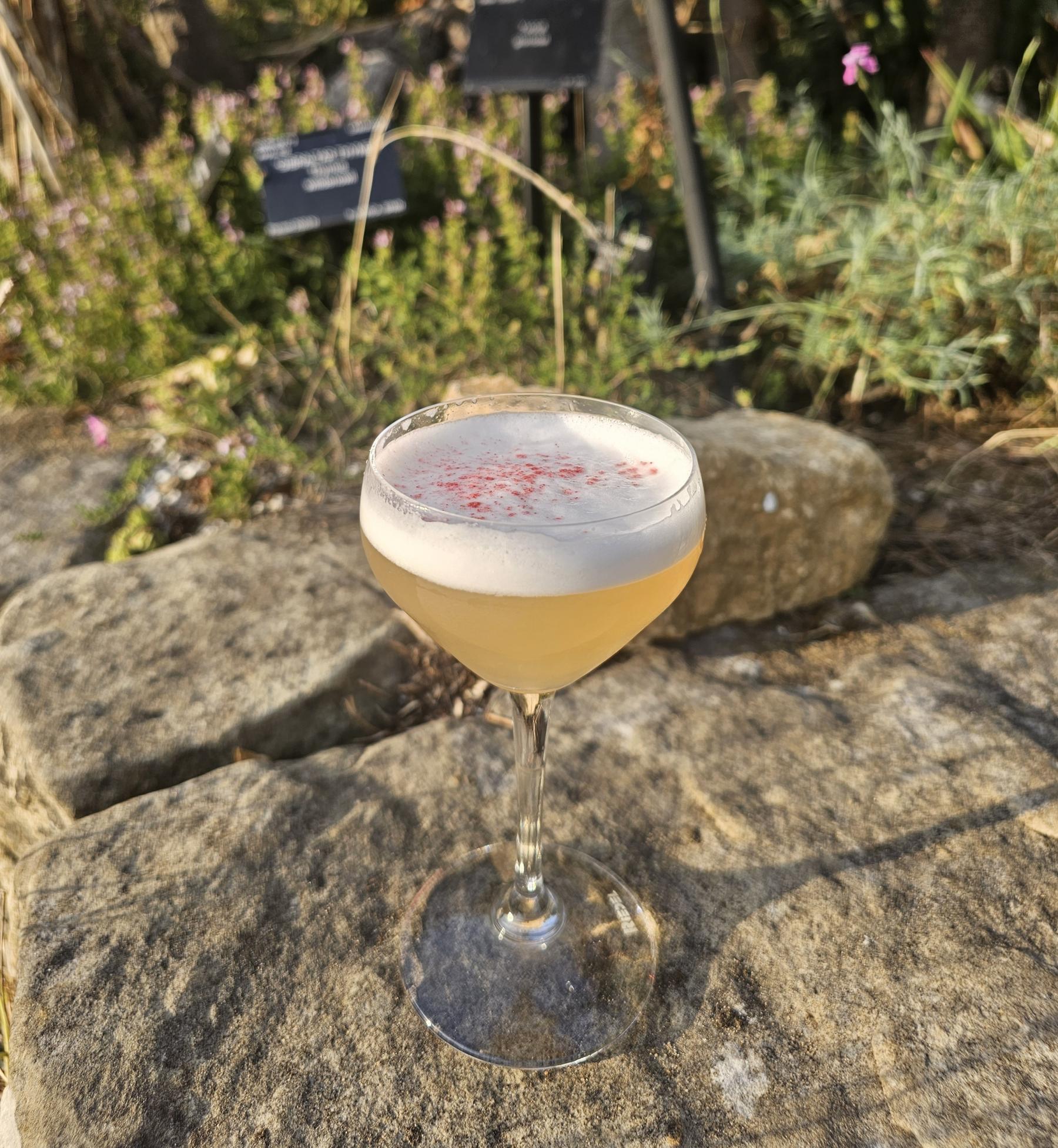 A pretty mocktail
 -
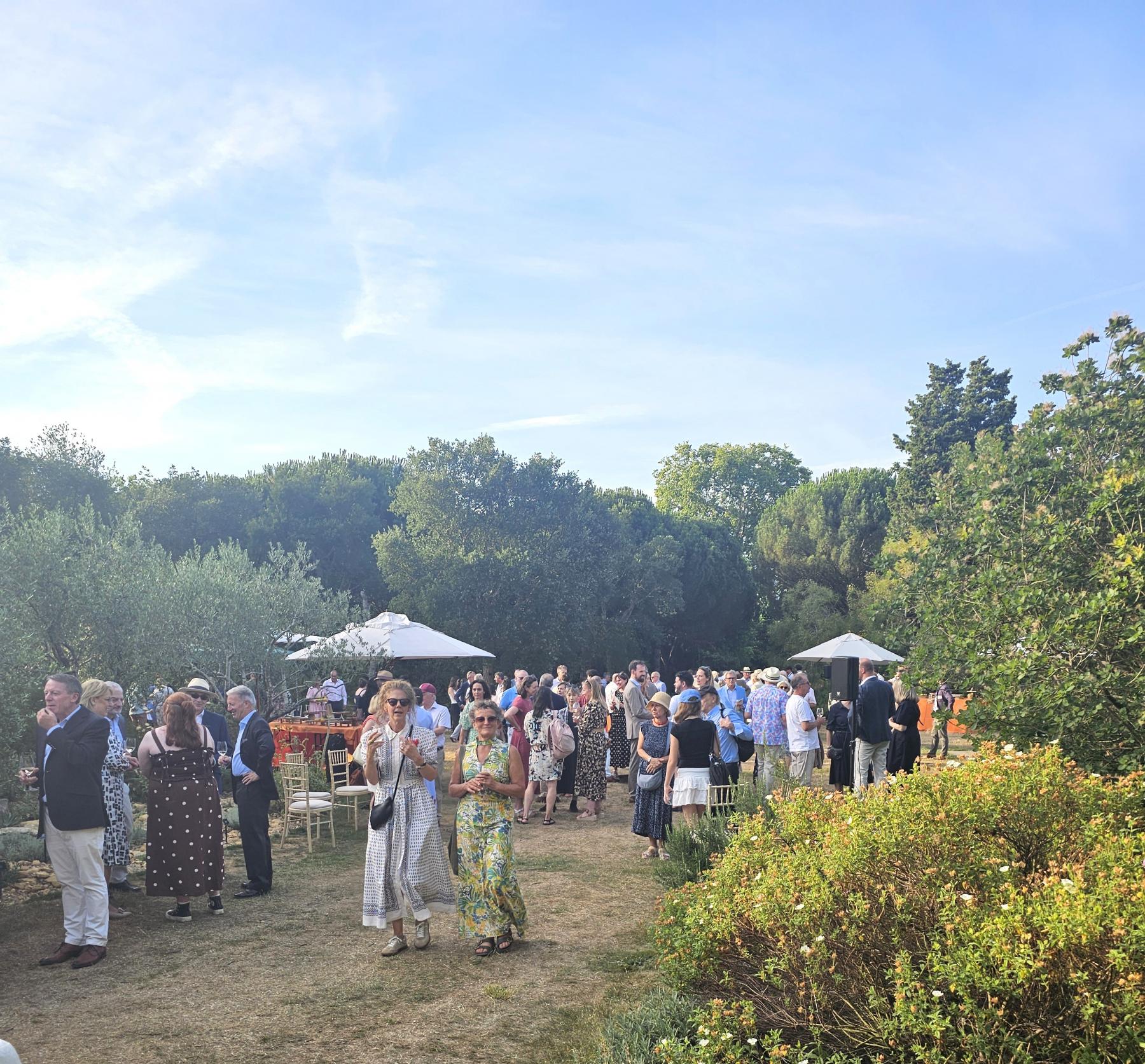 Guests
 -
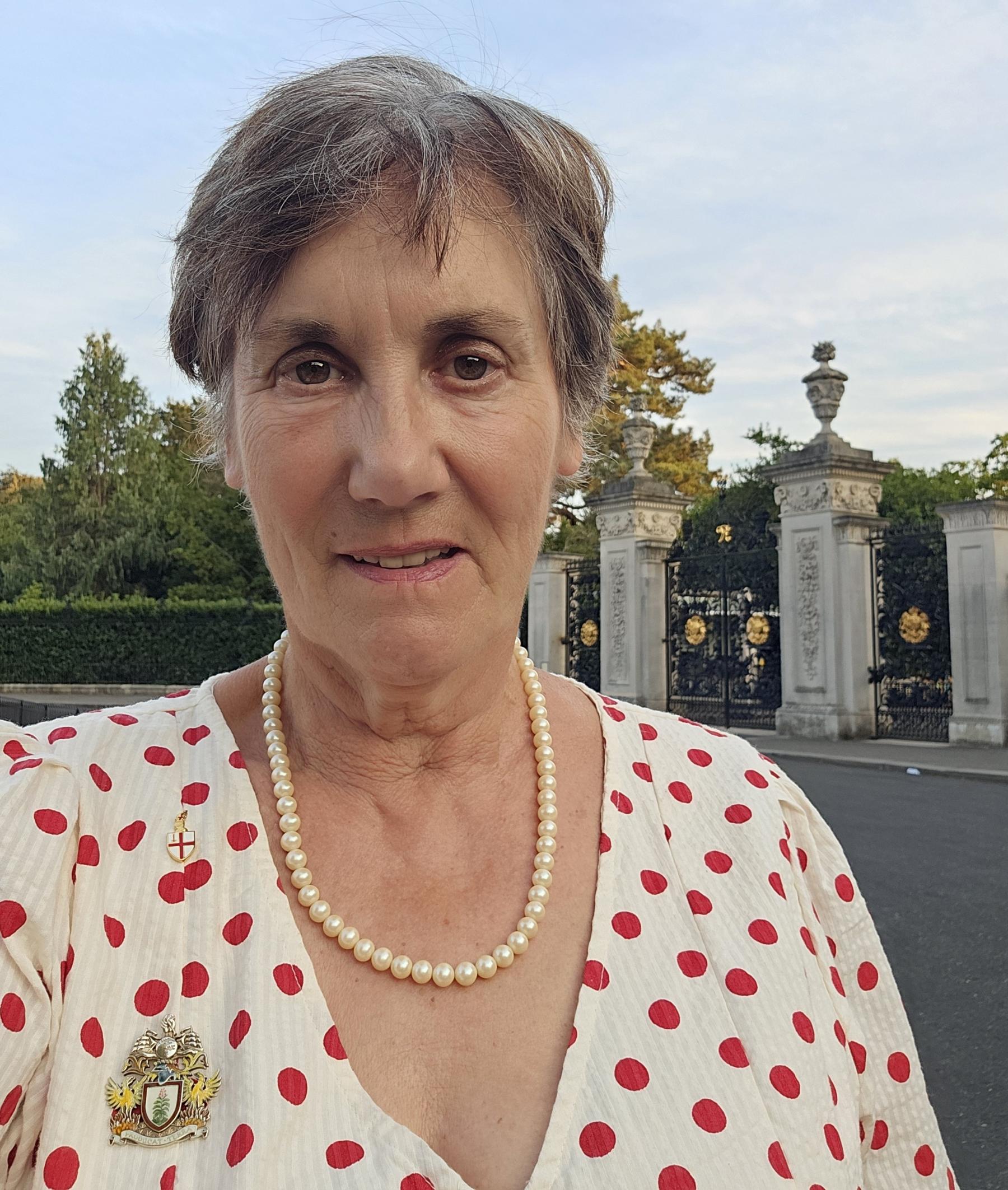 The Consort's badge comes in handy
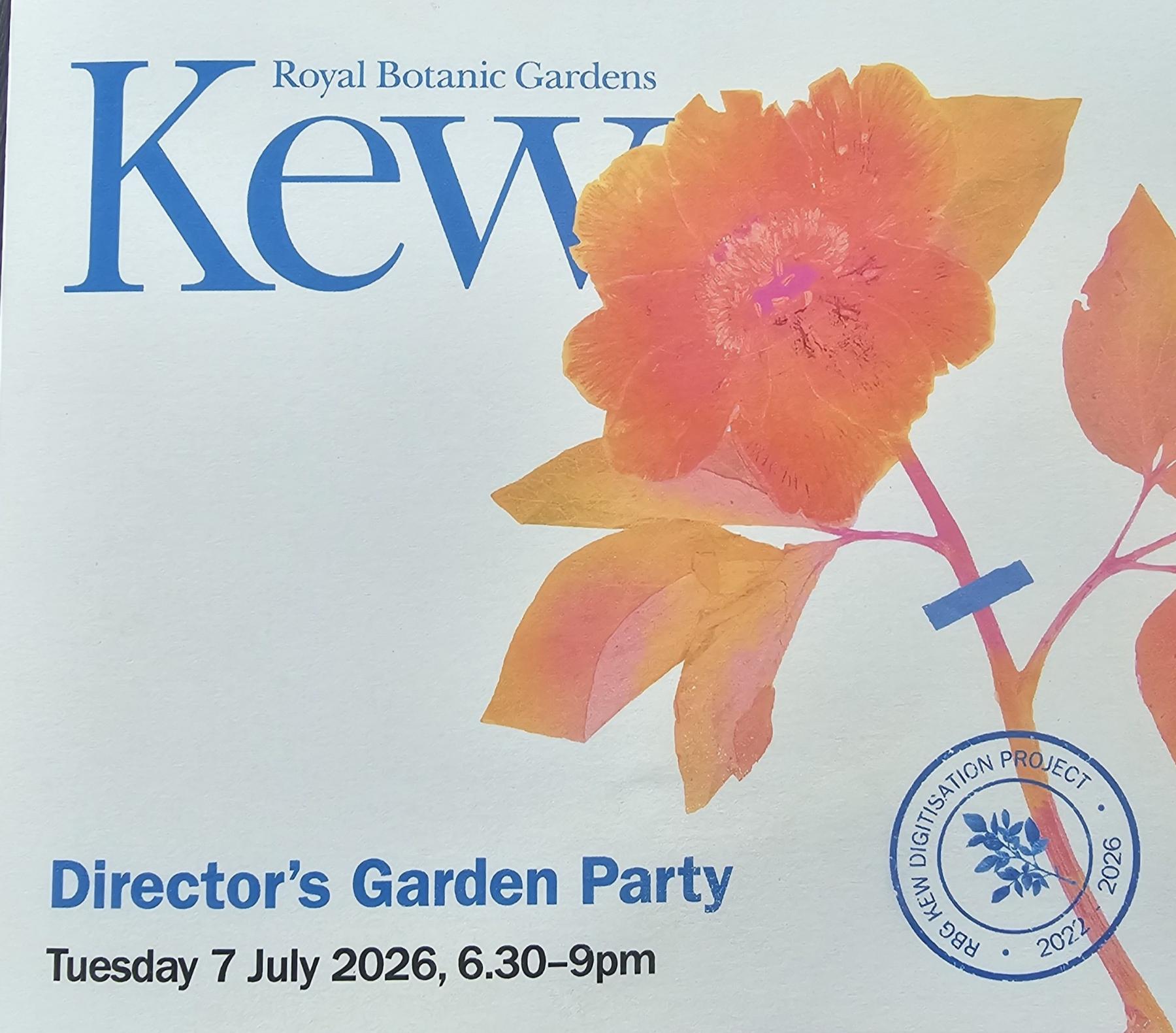
Royal Botanic Gardens: Director's Garden Party
7th July 2026Kew Gardens
The most bio-diverse 300 acres in the world.
I was surprised to realise that I had never visited the world-famous Royal Botanic Gardens at Kew, at least not as far as I can remember. I had spent plenty of time in offices just across Kew Bridge during the 1990s when I served as a Board member of the Tobacco Documentation Centre, and would occasionally wander across the bridge to Kew Green in search of a sandwich. Yet what are now described as "the most bio-diverse 300 acres in the world" remained an intriguing mystery behind the high brick Georgian walls and the elegant black-and-gold Elizabeth Gates.
One of the pleasures of following busy Masters who have built many friendships and made many contacts for the Company is that those often benefit their successors. Thanks to Past Master Henry Tuck, who has been exploring where and how our Company might support the work of Kew, I was passed an invitation from Richard Deverell to attend this year's Director's Garden Party. Richard has led Kew since 2012 and is a passionate advocate for the role that plants and fungi can play in helping humanity meet the great challenges of the twenty-first century and Henry has had several conversations with him about the potential role our Company can play in supporting the work done at Kew.
Parking the car nearby after driving from Bath, I wandered through the Elizabeth Gates just after six o'clock, just as the gardens were closing to the public, and was handed a map to guide me to the Mediterranean Garden where the party was to begin. Naturally, I chose the longest possible route. I didn't want to waste this opportunity!
My leisurely detour took me past the Orangery, along the Broad Walk with its magnificent Grand Borders—believed to be the longest herbaceous borders in the world—and past the iconic Palm House, before weaving through the rose gardens towards my destination. Along the way I admired several impressive sculptures by Henry Moore, each one perfectly at home among the trees and lawns.
With the day visitors gone, the gardens belonged once again to their permanent residents. It was a delight to stand quietly and watch five jays, a green woodpecker, a lesser spotted woodpecker and a flock of noisy green parakeets dust-bathing and searching for their suppers along the paths near King William's Temple. It was one of those magical moments that simply takes you by surprise and creates wonderful memories.
By the time I reached the Mediterranean Garden it was filling rapidly with guests. There was no shortage of excellent wine, pretty canapés and an imaginative cocktail bar serving garden-inspired drinks and mocktails. But for me, the greatest attraction was the opportunity to meet the scientists and specialists whose work makes Kew such an extraordinary institution.
Around the garden and in the Temple were displays explaining projects ranging from the Millennium Seed Bank and conservation work in Madagascar to the digitisation of Kew's vast archives and its community outreach programmes. It was fascinating to speak to the staff responsible for these initiatives and to hear their enthusiasm for what they do, and really enjoyed talking to Fiona Ainsworth, Head of Library and Archives. Perhaps an opportunity for a future Company visit, with the nicotiana plant so prominent in our Coat of Arms! I also met several interesting guests, each with their own connection to Kew.
Richard Deverell's speech brought together many of the themes reflected in those displays. After fourteen years as Director, he has witnessed first-hand the growing effects of climate change on the gardens. During the record-breaking 40°C heatwave of July 2022, more than 400 trees were killed. One poignant reminder is the so-called "Climate Change Oak", a 120-year-old tree that succumbed during that heatwave and whose scarlet-painted stump now stands as a stark warning of what lies ahead.
Standing in the Mediterranean Garden made Richard's point for him. The plants thriving there today may represent something of Britain's future, as our climate is expected to resemble that of Barcelona by the end of the century. Selecting species capable of withstanding prolonged drought and higher temperatures is no longer simply a horticultural curiosity but an essential part of planning for the future.
Richard also spoke of Kew's global role. It cares for what is arguably the world's greatest collection of plants and fungi, providing an unparalleled body of scientific knowledge that may help solve some of humanity's greatest challenges. The digitisation of Kew's extraordinary archives is making centuries of botanical knowledge available worldwide and, increasingly, allowing artificial intelligence to analyse these collections in ways previously unimaginable. He described this as "Kew's gift to the world".
This year also marks the twenty-fifth anniversary of the Millennium Seed Bank, one of Kew's greatest achievements. Holding seeds from around 40,000 species and working with partners across the globe, it represents an invaluable insurance policy for biodiversity.
Looking ahead, the ambitious restoration and decarbonisation of the Palm House is about to begin. By May 2027 the building will have been emptied of its remarkable collection of around 1,000 plant species, many of them critically endangered, so that this Victorian masterpiece can be secured for generations to come.
Richard concluded by reminding us that the wellbeing of humanity, and indeed all life on Earth, depends upon long-term institutional commitment, sound science and sustained investment. His thanks to donors, sponsors, fundraisers and those who have remembered Kew in their wills was heartfelt. Every contribution, he said, matters.
As the evening drew to a close and I wandered back through the peaceful gardens in the dusk, I reflected that Kew is far more than one of London's great visitor attractions. It is simultaneously a scientific institution, a conservation charity, a global research centre and a place of extraordinary beauty. I left wondering why it had taken me so many years to visit—and determined that I'll return.
I drove the long way home (M4 closed again) with a herbal seed bomb, made in Kew's community garden, to be planted somewhere that needs a little care and biodiversity. I can think of several places around Bath that will benefit from the Kew effect!